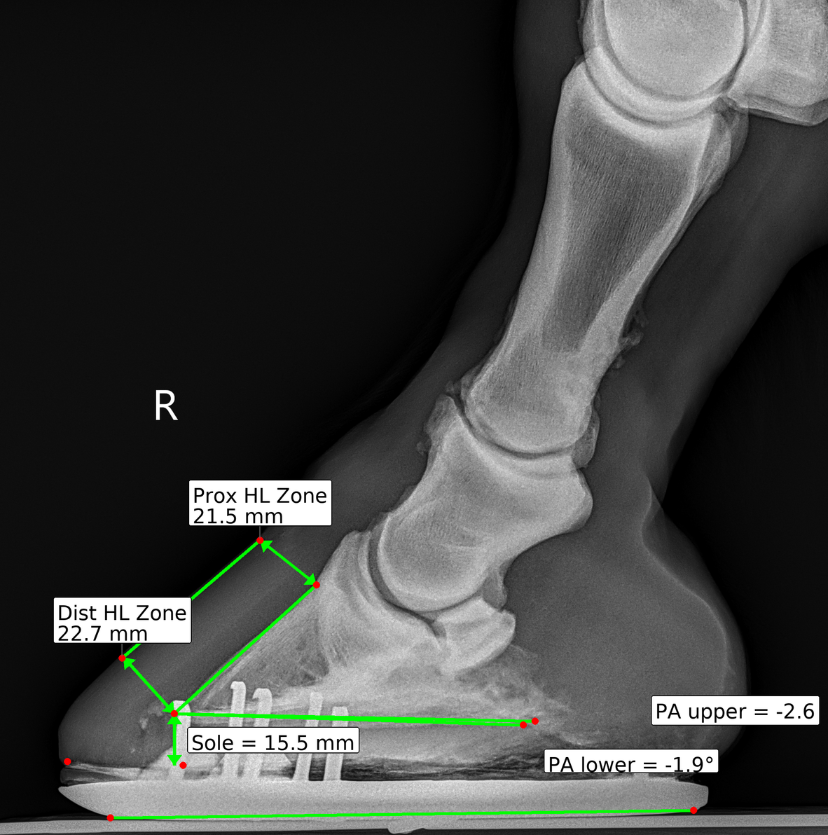
Sole depth is one of the most important measurements in equine hoof radiograph reports. It represents the distance between the distal border of the third phalanx (P3) and the ground surface of the sole — a small number that carries enormous clinical significance.
Why Sole Depth Matters
A horse with insufficient sole depth is at significantly elevated risk of bruising, laminitis, and chronic lameness. The sole acts as the primary protective layer between the sensitive structures of the foot and ground forces. When that layer is too thin, even routine work on firm footing becomes a source of pain and long-term damage.
Veterinarians and farriers have long assessed sole depth visually and tactilely, but these methods are inherently subjective. Radiograph measurement removes that subjectivity — producing a repeatable, comparable number that can be tracked across visits, shared between practitioners, and used to make objective trim and shoeing decisions.
What the Numbers Mean
In practice, most horses need a minimum of 15mm of sole depth to be considered adequately protected. High-performance horses, particularly those working on hard surfaces, benefit from greater depth — often 18–20mm or more. Numbers below 10mm indicate a horse that is at serious risk.
These thresholds are guidelines, not rules. Conformation, breed, workload, and individual variation all matter. The value of measurement is not the number in isolation — it’s the trend over time and the ability to communicate precisely with everyone involved in the horse’s care.
How DigiHoof Measures Sole Depth
DigiHoof generates standardized hoof radiograph measurements as part of every report. Sole depth is measured consistently using the same anatomical reference points, producing data that is directly comparable across visits, across practitioners, and across facilities.
When sole depth changes — improving after a corrective trim or declining in response to nutritional issues — DigiHoof captures that change in a format that both the attending veterinarian and the farrier can immediately act on.
This post was published via TheSocialPort. Re-publish from TSP to update with the latest content.